
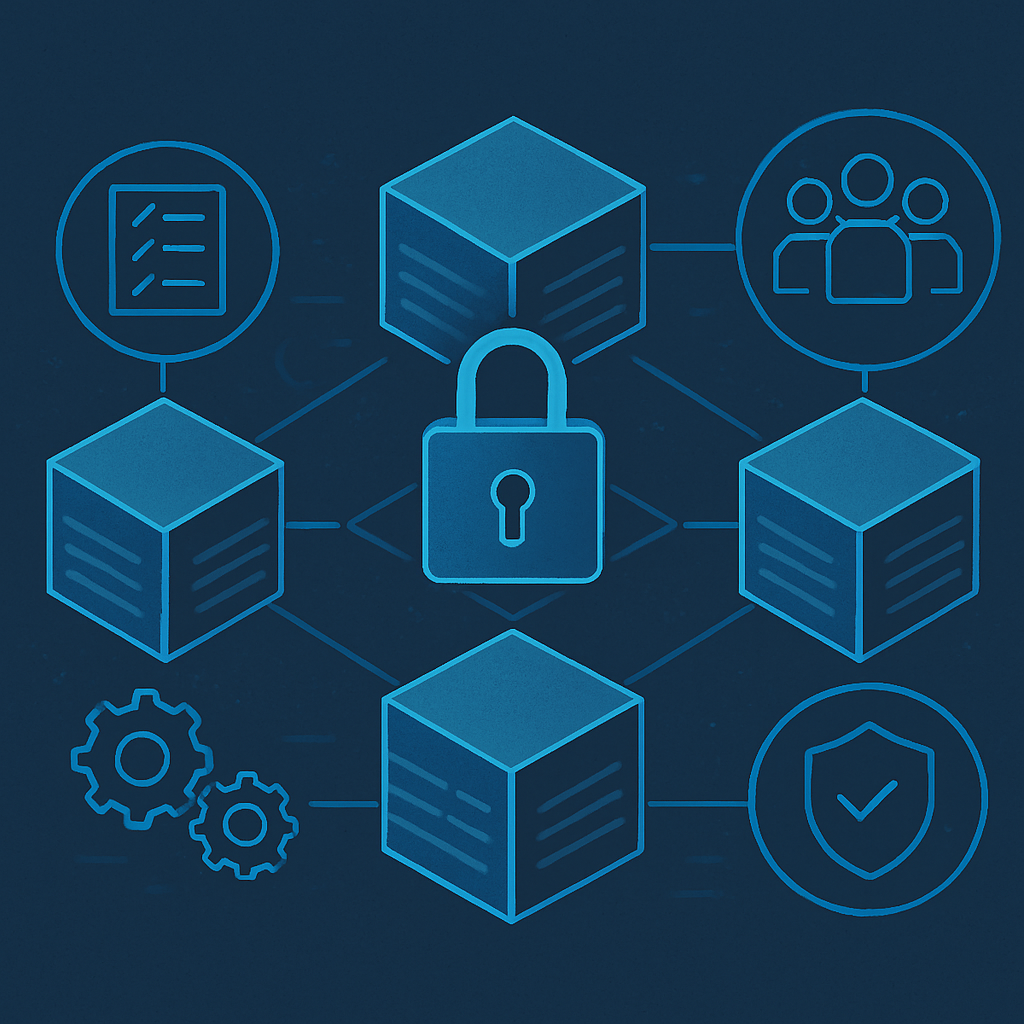
Every business transaction today relies on one essential element: trust. Whether you’re managing financial transactions, supply chains, or digital identities, the challenge remains the same how can multiple parties share information securely while avoiding dependency on a central authority? That’s where Blockchain Management and Blockchain Transformation Services step in.
In an era where data breaches, fraud, and inefficiencies cost billions, blockchain technology offers a transparent, tamper-proof system that decentralizes control and builds lasting trust between organizations.
From Decentralized Business Solutions to smart governance, blockchain is actively reshaping how enterprises share, verify, and protect data. Therefore, this blog explores what blockchain management is, how it works, and why it’s becoming the foundation for modern enterprise systems from finance to healthcare, logistics, and beyond.
What Is Blockchain Management?
At its core, Blockchain Management refers to the processes, tools, and strategies involved in building, maintaining, and governing blockchain networks.
Unlike traditional databases, a blockchain network doesn’t rely on a single central server. Instead, it uses a distributed ledger system, where every transaction is verified and stored across multiple participants.
Think of it as a digital ecosystem where:
- Data is stored in blocks,
- Blocks are linked chronologically in a chain,
- And once recorded, transactions cannot be altered without consensus.
In simpler terms, blockchain management ensures that this decentralized system runs smoothly, securely, and efficiently for enterprises.
It involves everything from:
- Designing blockchain architectures,
- Managing Blockchain Infrastructure Management processes,
- Integrating blockchain with existing enterprise systems,
- To ensuring compliance, scalability, and governance across the network.
As a result, Enterprise Blockchain Services turn blockchain from a buzzword into a scalable business framework.
Why Blockchain Technology Matters for Modern Businesses
To understand the importance of blockchain management, consider a common challenge:
Two companies exchange data say a financial record or a shipment confirmation. Both store this data in their respective systems. But what if one side alters the record?
Traditional systems rely on third-party intermediaries – auditors, banks, or clearinghouses – to verify transactions. While this adds legitimacy, it also introduces cost, delay, and vulnerability.
Here’s where Blockchain Solutions for Business make all the difference:
- Every transaction is verified through network consensus, not a single authority.
- Each record is immutable once added, it cannot be tampered with.
- The entire blockchain network ensures a shared, transparent source of truth.
This allows businesses to transact directly, securely, and efficiently, without unnecessary intermediaries.
Ultimately, blockchain isn’t just a technology it’s the backbone of Decentralized Business Solutions that power today’s digital economy.
How Blockchain Management Works
Blockchain systems may sound complex, but their management follows a clear, structured process.
Record the Transaction
Each transaction represents the movement of digital or physical assets money, data, or documents. The transaction is recorded as a data block, containing:
- Who was involved
- What occurred
- When and where it happened
- Why it took place
- Verification details
Achieve Consensus
Before approval, participants in the blockchain network must agree the transaction is valid. Consensus algorithms (Proof of Work, Proof of Stake, etc.) ensure network-wide verification.
Link the Blocks
Once validated, each new block is cryptographically linked to the previous one forming an immutable chain.
Share the Updated Ledger
All participants receive an updated ledger copy, ensuring everyone shares the same verified truth. The process is automated, auditable, and governed by strong Blockchain Infrastructure Management practices.
The Core Components of Blockchain Management
Effective blockchain management relies on several interconnected components that form the base of Enterprise Blockchain Services:
- Distributed Ledger: The shared, synchronized database that records every transaction across participants.
- Smart Contracts: Automated digital agreements that execute when predefined conditions are met.
Example: A logistics smart contract automatically triggers payment once goods reach a port. - Consensus Mechanisms: Protocols ensuring all network nodes agree on transaction validity.
- Cryptographic Security: The foundation of Blockchain Data Security, using public-private key encryption to ensure only authorized participants can access sensitive data.
- Governance & Scalability: Managed through Blockchain Infrastructure Management and Blockchain Scalability Solutions, ensuring performance and compliance.
Together, these make Blockchain Management Services more than technology they form structured, secure, and auditable business ecosystems.
Real World Applications of Blockchain Management
Blockchain Solutions for Business are already revolutionizing industries worldwide:
- Finance: Real-time settlement of transactions, fraud prevention, and decentralized identity systems.
- Supply Chain: End-to-end product traceability, reducing counterfeiting and improving logistics transparency.
- Healthcare: Secure sharing of patient data while maintaining Blockchain Data Security and regulatory compliance.
- Energy: Peer-to-peer trading via Blockchain Integration Services enabling automated, verifiable billing through smart contracts.
- Retail: Product authenticity verification and transparent inventory tracking using Blockchain Transformation Services.
- Government: E-governance, secure documentation, and digital ID validation powered by Blockchain Network frameworks.
These Decentralized Business Solutions create smarter ecosystems driven by automation, transparency, and trust.
Benefits of Blockchain Management Services
Enterprises investing in blockchain management gain tangible advantages:
- Transparency: Shared ledgers ensure all authorized participants see the same verified data.
- Security: Strong Blockchain Data Security eliminates single points of failure.
- Efficiency: Automated workflows through smart contracts reduce manual costs.
- Scalability: Optimized via Blockchain Scalability Solutions for high-volume data and transactions.
- Immutability: The blockchain preserves every record exactly as written, guaranteeing clear and reliable audits.
- Compliance: Ensured through structured Blockchain Infrastructure Management and governance frameworks.
These factors empower Blockchain for Enterprises to evolve from traditional IT systems to trust-driven ecosystems.
Choosing the Right Blockchain Partner
Implementing blockchain effectively requires technical depth and business strategy.
Therefore, when selecting a Blockchain Consulting Services or Enterprise Blockchain Services partner, you should look for
- End-to-End Capabilities: From consulting to deployment and support.
- Integration Expertise: Proven Blockchain Integration Services with enterprise systems.
- Security Practices: Data encryption, key management, and compliance knowledge.
- Customization: Tailored Blockchain Transformation Services for specific industries.
- Sustainability: Long-term governance and system scaling with Blockchain Scalability Solutions.
The right partner transforms blockchain from a concept into a measurable competitive advantage.
Conclusion
As businesses accelerate digital transformation, trust has become their most valuable asset. Blockchain Management empowers organizations to operate securely, transparently, and efficiently without dependence on intermediaries.
Moreover, by integrating Blockchain Infrastructure Management, Blockchain Data Security, and Blockchain Scalability Solutions, enterprises gain a digital foundation that is transparent, auditable, and future-ready.
From Decentralized Business Solutions to enterprise-grade governance, blockchain ensures that every transaction is verified, every system is secure, and every operation is trustworthy. The future belongs to businesses that adopt Blockchain for Enterprises today building a smarter, safer, and more transparent world powered by Enterprise Blockchain Services.
FAQs
What is Blockchain Management used for in enterprises?
It ensures the smooth operation, security, and scalability of blockchain networks — helping businesses maintain transparency and trust across systems.
How does Blockchain differ from traditional databases?
Unlike centralized databases, Blockchain Networks distribute data, protect it from tampering, and give every participant the ability to verify transactions.
What are Blockchain Integration Services?
They connect blockchain systems with enterprise tools like ERP or CRM, allowing seamless data flow across digital ecosystems.